
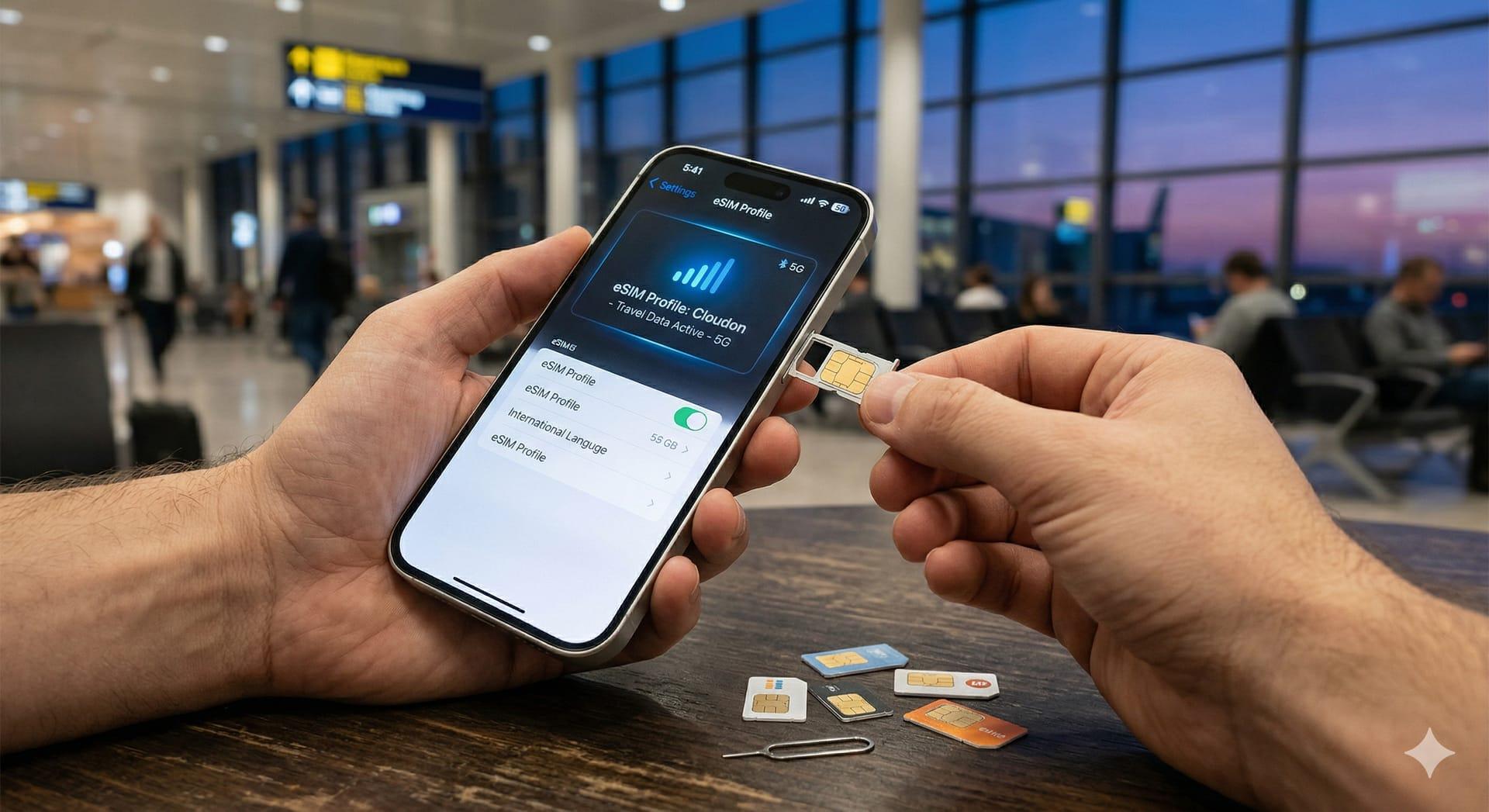
eSIM vs Physical SIM for Travel: The Ultimate 2026 Connectivity Guide
Landing in a new country used to mean one thing: the frantic hunt for an airport kiosk to buy a local SIM card. But with the rise of eSIM technology, the way we stay connected while traveling has fundamentally shifted.
If you are asking yourself, "Should I get an eSIM or a physical SIM for my next trip?"—you are in the right place. This guide compares eSIM vs physical SIM for international travel to help you save money and stay connected at 5G speeds.
What is an eSIM? (And How It Works for Travelers)
An eSIM (Embedded SIM) is a digital version of the traditional plastic SIM card. Instead of inserting a chip, the hardware is already built into your smartphone. You simply download a "profile" from a provider like Cloudon to activate a data plan.
Key Differences at a Glance:
Physical SIM: A removable plastic chip that stores your subscriber info.
eSIM: A programmable chip embedded in your phone; no physical swapping required.
eSIM vs Physical SIM: Detailed Comparison
1. Convenience and Ease of Setup
eSIM: You can purchase and install a plan before you leave home. The moment your plane lands, you have 4G/5G data. No lines, no language barriers, and no searching for a SIM tool.
Physical SIM: You must find a retail store, wait in line, and often provide passport documentation for registration. This can take anywhere from 30 minutes to two hours of your vacation time.
2. Cost Comparison: Which is Cheaper?
Local Physical SIMs: Often the cheapest option for long-term stays (over 30 days) in a single country.
Travel eSIMs: Best for short-to-medium trips and multi-country hopping. While a local SIM might be $2 cheaper, the time saved and the ability to avoid "airport tourist prices" usually makes eSIM the more economical choice for most.
3. Network Coverage and Data Speeds
Does an eSIM offer the same speed as a physical SIM? Yes. Both technologies connect to the same local cellular towers. Whether you choose an eSIM or a physical SIM, your data speed (4G LTE or 5G) is determined by the local carrier’s infrastructure, not the SIM format.
Top 5 Benefits of Using an eSIM for International Travel
Dual-SIM Capability: Keep your home physical SIM active for important texts/2FA codes while using the eSIM for affordable local data.
Multi-Country Flexibility: Traveling through Europe or Asia? One regional eSIM can cover 30+ countries, so you don't have to change SIM cards every time you cross a border.
Enhanced Security: An eSIM cannot be physically stolen or removed. If your phone is lost, the thief cannot remove the SIM to bypass tracking.
Eco-Friendly: No plastic waste and no shipping required.
No More "SIM Swapping": Say goodbye to the fear of losing your tiny home SIM card in a hotel room or airplane seat.
Is Your Device eSIM Compatible?
Before you switch, ensure your device supports the technology. Most flagship phones released after 2020 are compatible, including:
iPhone: 11, 12, 13, 14, 15, 16 series and SE.
Samsung: S20, S21, S22, S23, S24 series, and Z Flip/Fold.
Google: Pixel 3 through Pixel 9.
Pro Tip: Your phone must be carrier-unlocked to use a travel eSIM from a third-party provider.
Regional Recommendations: Where to Use What
Best for Europe Trips: eSIM
With "Roam Like at Home" regulations and excellent regional eSIM providers, one digital plan can cover you from London to Athens seamlessly.
Best for Remote Asia or Africa: Physical SIM
In very rural areas or developing nations, local carriers may offer better "on-the-ground" support and cheaper data packages via physical cards compared to global eSIM roaming providers.
The Verdict: eSIM vs Physical SIM for Travel?
Choose eSIM if: You value time, travel to multiple countries, or want to keep your home number active. It is the gold standard for travel in 2026.
Choose Physical SIM if: You are using an older device, staying in one country for 3+ months, or need a specific local phone number for voice calls.
Ready to skip the airport lines? Check out the latest Global eSIM Plans and get connected in minutes.
Frequently Asked Questions (FAQs)
Can I use my WhatsApp with an eSIM?
Yes. Your WhatsApp is tied to your phone number, not your data source. You can continue using your original account without any changes.
Does eSIM drain battery faster?
In "Dual-SIM" mode (running both your home SIM and a travel eSIM), you may see a 5-10% faster battery drain as the phone maintains two connections.
Can I switch back to a physical SIM later?
Absolutely. Using an eSIM does not affect your physical SIM slot. You can go back to using physical cards whenever you like.
How was your last experience with international roaming? Are you team eSIM or team Physical SIM?
Ready to get an eSIM?
Browse plans for 190+ countries. Purchase in minutes, install in seconds.