

In This Guide
Can You Use WhatsApp in China?
What Apps Are Blocked in China in 2026?
How China's Great Firewall Actually Works
Does WhatsApp Work in China With an eSIM?
How a Travel eSIM Bypasses the Great Firewall
What Apps Work With a Travel eSIM in China?
Travel eSIM vs VPN for China
The Smart Setup: eSIM + VPN Together
CloudOn eSIM vs Chinese Local SIM
How to Use CloudOn eSIM in China
FAQ
Can You Use WhatsApp in China?
The short answer: no — not on a regular Chinese network.
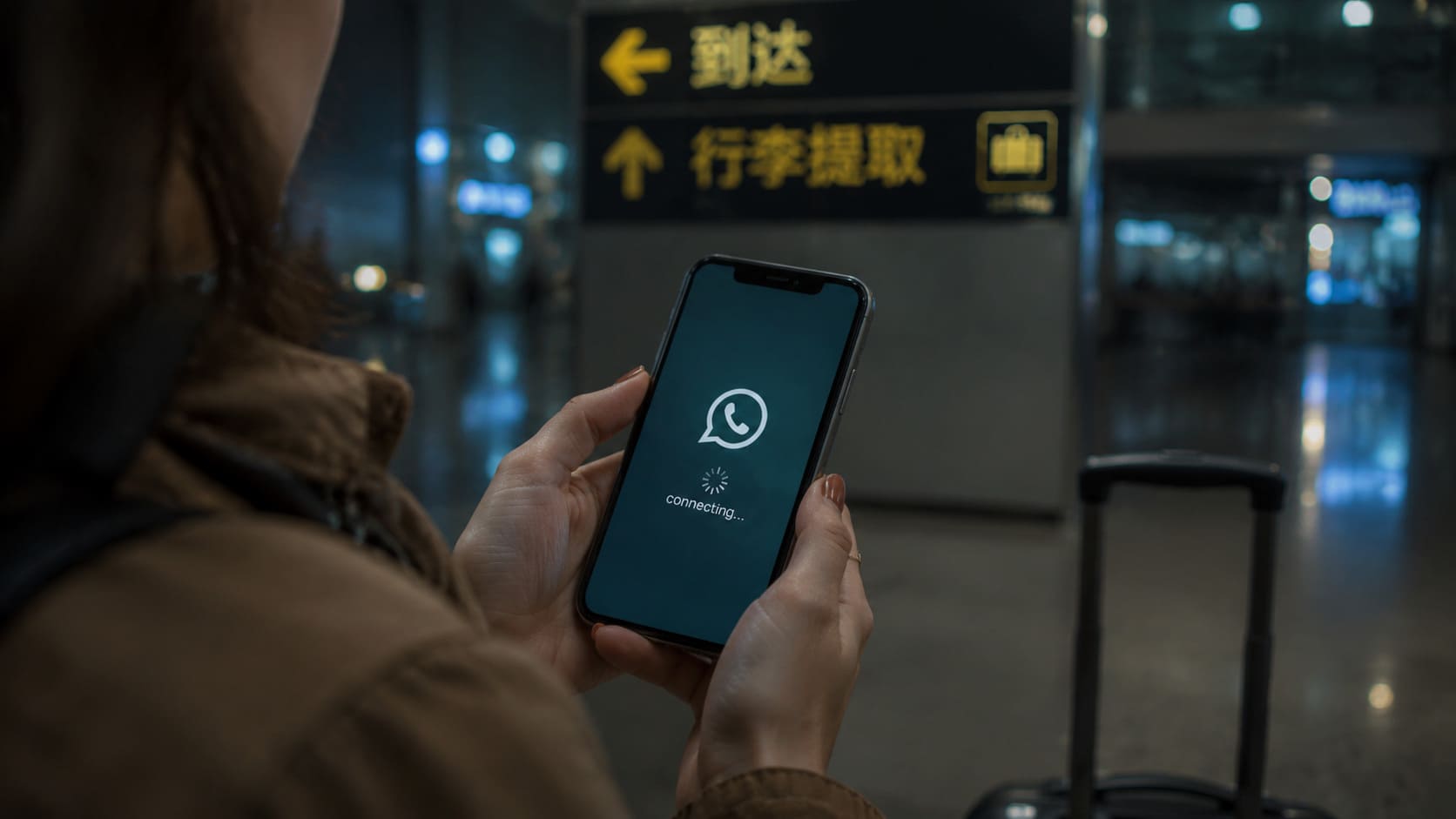
WhatsApp, along with dozens of other international apps and services, is blocked in mainland China by the country's internet filtering system known as the Great Firewall. If you land in China and connect to a local Wi-Fi network or use a Chinese SIM card, WhatsApp simply won't connect. No messages in, no messages out, no calls.
For the millions of travelers who rely on WhatsApp to stay in touch with family, coordinate with travel companions, or communicate with clients, this is a serious problem. The same goes for anyone who depends on Google Maps for navigation, Gmail for email, or Instagram to share their trip.
But here's what most travelers don't realize: there's a way to use WhatsApp in China without a VPN — and it involves how your phone connects to the internet, not which app you install.
What Apps Are Blocked in China in 2026?
Before we get to the solution, here's the scope of the problem. These are the major apps blocked in China as of 2026:
Messaging: WhatsApp, Telegram, Signal, Facebook Messenger
Social media: Facebook, Instagram, X (formerly Twitter), Snapchat, Reddit, Threads
Google services: Google Search, Gmail, Google Maps, Google Drive, Google Photos, YouTube, Google Play Store, Google Calendar — essentially the entire Google ecosystem
Media and entertainment: Netflix, Spotify (limited), many Western news websites
Other: ChatGPT, most Western AI tools, many cloud storage services
If you depend on any of these services — and most international travelers do — you need a solution before you arrive. Once you're in China on a local network, you can't download VPN apps or access the websites where you'd buy an eSIM. You must prepare before you land.
How China's Great Firewall Actually Works
Understanding why some connections are blocked — and why others aren't — requires a basic understanding of how the Great Firewall operates.
The Great Firewall (officially the Golden Shield Project) filters internet traffic at the network level. When your device connects to the internet through a Chinese network — whether that's local Wi-Fi, a Chinese SIM card, or a Chinese broadband connection — your data passes through government-controlled inspection points before reaching the global internet. These inspection points identify and block requests to banned services like Google, WhatsApp, and Facebook.
The critical detail: the filtering happens based on which network routes your data, not based on your device or your app. Your phone doesn't know the difference. The network does.
This is exactly why a travel eSIM changes everything.
Does WhatsApp Work in China With an eSIM?
Yes — but not just any eSIM. The key factor is how the eSIM routes your mobile data.
Not all eSIMs are created equal when it comes to China. Here's the important distinction:
A Chinese domestic eSIM (if one existed for tourists) would route your data through mainland Chinese networks — and the Great Firewall would filter it just like any local connection.
An international travel eSIM from an overseas provider routes your data differently. Your phone connects to a Chinese cell tower for the physical radio signal, but your data traffic is routed through an international gateway — typically in Hong Kong or Singapore — before reaching the open internet. Because your data exits China through this international pathway, it never passes through the Great Firewall's inspection points.
The result: WhatsApp, Google, Facebook, Instagram, and other blocked services work normally on your phone — as if you were still in your home country.
This isn't a hack or a workaround. It's how international roaming has always worked. Your eSIM provider has agreements with Chinese carriers to carry your signal, but your data is processed by your provider's home network abroad, not by the Chinese internet infrastructure.
How a Travel eSIM Bypasses the Great Firewall
Let's make this even simpler with a direct comparison:
When you use local Chinese Wi-Fi or a Chinese SIM: your device connects to a Chinese network, your data is routed through mainland Chinese servers, the Great Firewall inspects and filters your traffic, and blocked services like WhatsApp and Google are inaccessible.
When you use an international travel eSIM: your device connects to a Chinese cell tower for signal, your data is routed through an international gateway (Hong Kong, Singapore, or another hub), your traffic reaches the global internet without passing through the Great Firewall, and WhatsApp, Google, Facebook, Instagram, and other services work normally.
The physical connection is in China. The data routing is international. That's the difference.
This is why it matters which eSIM provider you choose. Providers that route China traffic through international gateways give you unrestricted access. The routing is what makes or breaks your experience — not the app, not your phone model, not your nationality.
What Apps Work With a Travel eSIM in China?
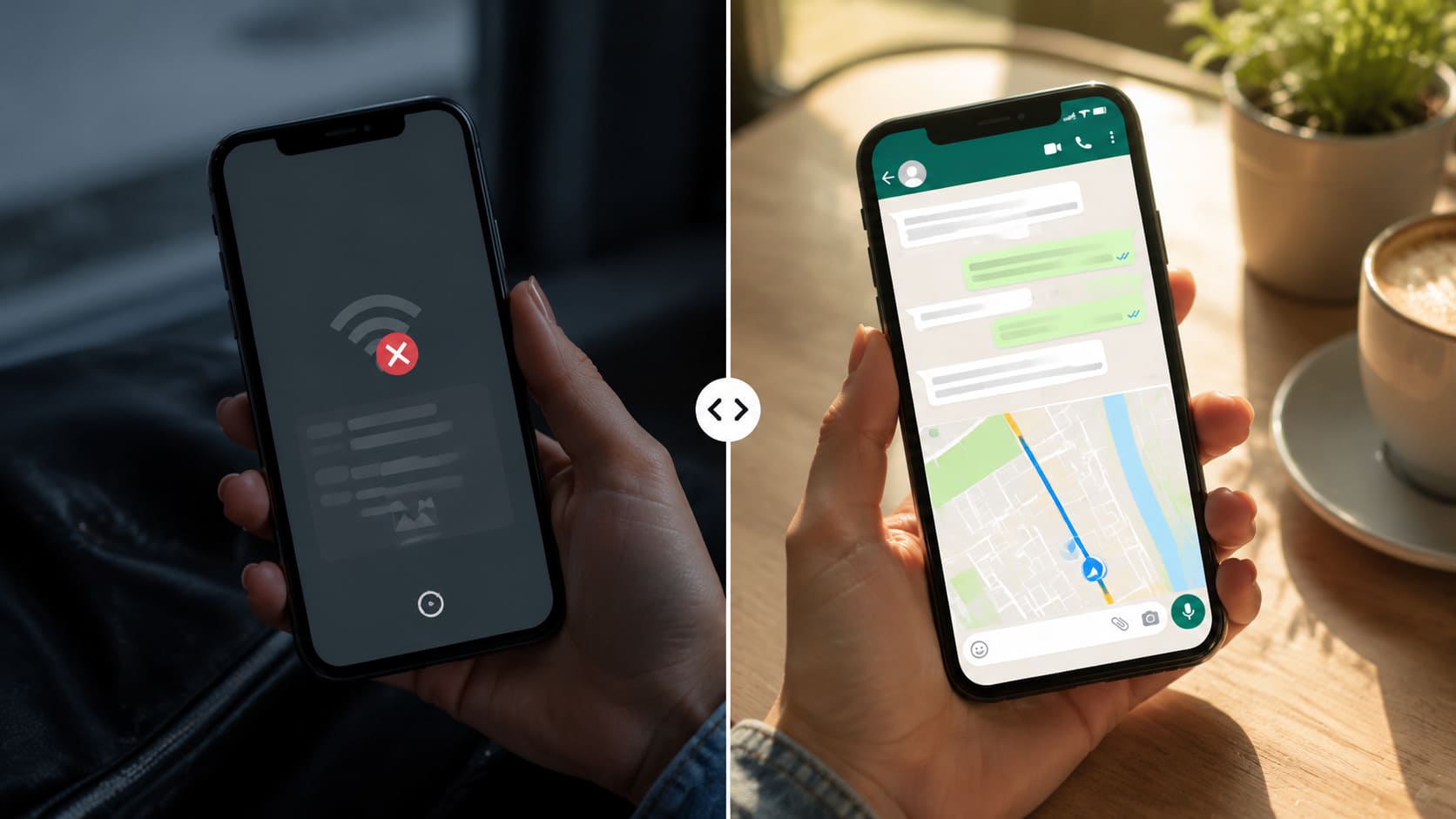
Here's what you can expect when using an internationally-routed travel eSIM like CloudOn in mainland China versus a local Chinese network:
WhatsApp — blocked on local Chinese networks, accessible with CloudOn eSIM.
Facebook — blocked on local Chinese networks, accessible with CloudOn eSIM.
Instagram — blocked on local Chinese networks, accessible with CloudOn eSIM.
Google Search — blocked on local Chinese networks, accessible with CloudOn eSIM.
Gmail — blocked on local Chinese networks, accessible with CloudOn eSIM.
Google Maps — blocked on local Chinese networks, accessible with CloudOn eSIM.
YouTube — blocked on local Chinese networks, accessible with CloudOn eSIM.
X (Twitter) — blocked on local Chinese networks, accessible with CloudOn eSIM.
Telegram — blocked on local Chinese networks, accessible with CloudOn eSIM.
ChatGPT — blocked on local Chinese networks, accessible with CloudOn eSIM.
Netflix — blocked on local Chinese networks, accessible with CloudOn eSIM.
This access applies when you're using the eSIM's mobile data connection. There's one important limitation to understand — covered in the next section.
Travel eSIM vs VPN for China: An Honest Comparison
Both eSIMs and VPNs can give you access to blocked services in China. But they work very differently, and each has distinct strengths and weaknesses. Here's a transparent eSIM vs VPN for China breakdown:
Reliability: A travel eSIM offers around 99%+ uptime because international roaming is a standard cellular protocol that China doesn't block. VPNs are significantly less reliable — the Great Firewall actively identifies and throttles VPN connections, and entire VPN services have gone dark inside China for periods in 2026.
Setup complexity: An eSIM installs in minutes from an app with no technical configuration. A VPN requires downloading the app, creating an account, and often testing multiple servers to find one that works — all of which must be done before entering China, since VPN websites are blocked inside the country.
Works on mobile data: Yes for both. This is where they overlap.
Works on hotel/cafe Wi-Fi: This is the eSIM's key limitation. When you connect to local Wi-Fi, your data routes through Chinese networks regardless of your eSIM. The Great Firewall applies, and blocked apps stop working. A VPN, however, can encrypt your Wi-Fi traffic and tunnel it out — so a VPN works on any network, including Wi-Fi.
Works on laptop: Most travel eSIMs are phone-only (unless you tether via hotspot). A VPN works on any device — laptop, tablet, phone.
Cost: eSIM plans for China typically cost more than VPN subscriptions. A China eSIM might run $10–30+ depending on data and duration. A VPN subscription costs roughly $3–10 per month.
Provides mobile data: An eSIM provides actual cellular data. A VPN does not — it only encrypts existing connections.
No software needed: An eSIM requires no additional app running in the background. A VPN requires an active app connection that can drain battery and occasionally disconnect.
Legal considerations: International roaming via eSIM is entirely standard and legal. VPN usage in China occupies a legal grey area — personal VPN use by tourists is generally tolerated, but it's technically regulated.

The Smart Setup: eSIM + VPN Together
Here's what experienced China travelers actually recommend: use both.
Your travel eSIM is your primary connection. It handles all your mobile data needs with unrestricted access to every app. It's reliable, fast, and requires zero technical management once activated.
Your VPN is your backup for Wi-Fi situations. When you're at your hotel, a coworking space, or a cafe and want to use their Wi-Fi (to save eSIM data or because you need a faster connection for heavy downloads), the VPN lets you access blocked services over that local network.
This combination covers every scenario: eSIM for mobile data with full app access everywhere you go, VPN for Wi-Fi networks where the firewall would otherwise apply, and peace of mind knowing you have a fallback if either solution has a momentary issue.
Install and test both before you arrive in China. Once you're inside the country on a local network, you won't be able to download VPN apps or access eSIM provider websites.
CloudOn eSIM vs Chinese Local SIM
Some travelers consider buying a local Chinese SIM card on arrival. Here's how that compares to using CloudOn's eSIM:
App access: A CloudOn eSIM gives you access to WhatsApp, Google, Facebook, and all international services. A Chinese local SIM does not — all blocked apps remain blocked.
Activation: CloudOn activates instantly from the app before you even land. A local SIM requires visiting a physical shop, presenting your passport, going through registration, and dealing with potential language barriers.
Data routing: CloudOn routes data internationally, bypassing the Great Firewall. A local SIM routes through Chinese networks with full firewall filtering.
Keeping your home number: With CloudOn as your data eSIM, your primary SIM slot stays active for calls and texts from home. With a local SIM, you'd need to swap out your home SIM (unless your phone supports dual physical SIMs or eSIM + physical SIM).
Local services: A Chinese local SIM gives you a Chinese phone number, which can be useful for local services like Didi (ride-hailing), Alipay, or WeChat verification. CloudOn's eSIM provides data only — no local Chinese number.
Cost: Local Chinese SIMs are extremely cheap for data. CloudOn costs more but provides unrestricted international app access.
The practical approach for most travelers: use CloudOn eSIM as your primary data connection (with full app access), and download Chinese alternatives for local services — Baidu Maps instead of Google Maps when offline, WeChat for local messaging, Alipay or WeChat Pay for payments. You get the best of both worlds without needing a local SIM.
How to Use CloudOn eSIM in China: Step-by-Step
Setting up is straightforward, but timing matters. Follow these steps before your departure:
Step 1 — Purchase before you leave: Open the CloudOn app and select a China or Asia plan. Do this while you still have unrestricted internet access — ideally a day or two before your flight.
Step 2 — Install the eSIM: Scan the QR code or use the direct install option to add the eSIM profile to your phone. This requires an internet connection, so do it at home or at the airport before boarding.
Step 3 — Configure your phone: Go to your phone's cellular settings. Set CloudOn as your data line. Keep your home SIM as your voice/SMS line if you want to remain reachable on your regular number.
Step 4 — Enable data roaming: In your phone settings, make sure data roaming is turned on for the CloudOn eSIM. This is required for the international routing to work.
Step 5 — Land and connect: When you arrive in China, your phone will connect to a local cell tower and your data will route internationally through CloudOn's network. Open WhatsApp, Google, or Instagram — they should work immediately.
Step 6 — Test your connection: Send a WhatsApp message, load Google Maps, check Gmail. Confirm everything works before you leave the airport.
If you have any issues, CloudOn's customer support is available 24/7 to help troubleshoot.

Frequently Asked Questions
Can you use WhatsApp in China?
Not on a local Chinese network. WhatsApp is blocked by the Great Firewall. However, with an international travel eSIM like CloudOn that routes data through an overseas gateway, WhatsApp works normally on mobile data.
Can you use Facebook in China?
Facebook is blocked in mainland China. An internationally-routed travel eSIM bypasses this restriction on mobile data. On local Wi-Fi, you'd need a VPN.
Can you use Instagram in China?
Instagram is blocked in China. The same eSIM routing that enables WhatsApp also enables Instagram access on mobile data.
Can you use Google in China?
The entire Google ecosystem — Search, Gmail, Maps, YouTube, Drive, Calendar — is blocked in China. An international travel eSIM restores access to all Google services on mobile data.
Do you need a VPN in China?
Not necessarily for mobile data if you have an internationally-routed eSIM. But a VPN is still recommended as a backup for when you're on local Wi-Fi, where the eSIM's routing doesn't apply.
Does eSIM work in China?
Yes. Modern phones support eSIM, and international eSIM providers offer China-compatible plans. The eSIM connects to Chinese cell towers for signal but routes data internationally.
Which eSIM works in China without a VPN?
International travel eSIM providers that route data through gateways in Hong Kong or Singapore — including CloudOn, Airalo, and Nomad — generally provide unrestricted access to international apps without needing a VPN.
Can I use WhatsApp with an eSIM in China?
Yes. When your eSIM routes data through an international gateway, WhatsApp connects as if you were outside China. Messages, calls, and media all work normally.
Does the eSIM work on hotel Wi-Fi in China?
No. The eSIM's international routing only applies to mobile data. When you connect to hotel Wi-Fi, your traffic goes through Chinese networks and the firewall applies. Use a VPN for unrestricted access on Wi-Fi.
Should I get an eSIM or a VPN for China?
Ideally, both. The eSIM is your primary reliable solution for mobile data with full app access. The VPN is your backup for Wi-Fi situations. Together, they cover every connectivity scenario.
Last updated: September 2026. Internet restrictions and eSIM routing may change. Verify current service behavior with your provider before traveling.