
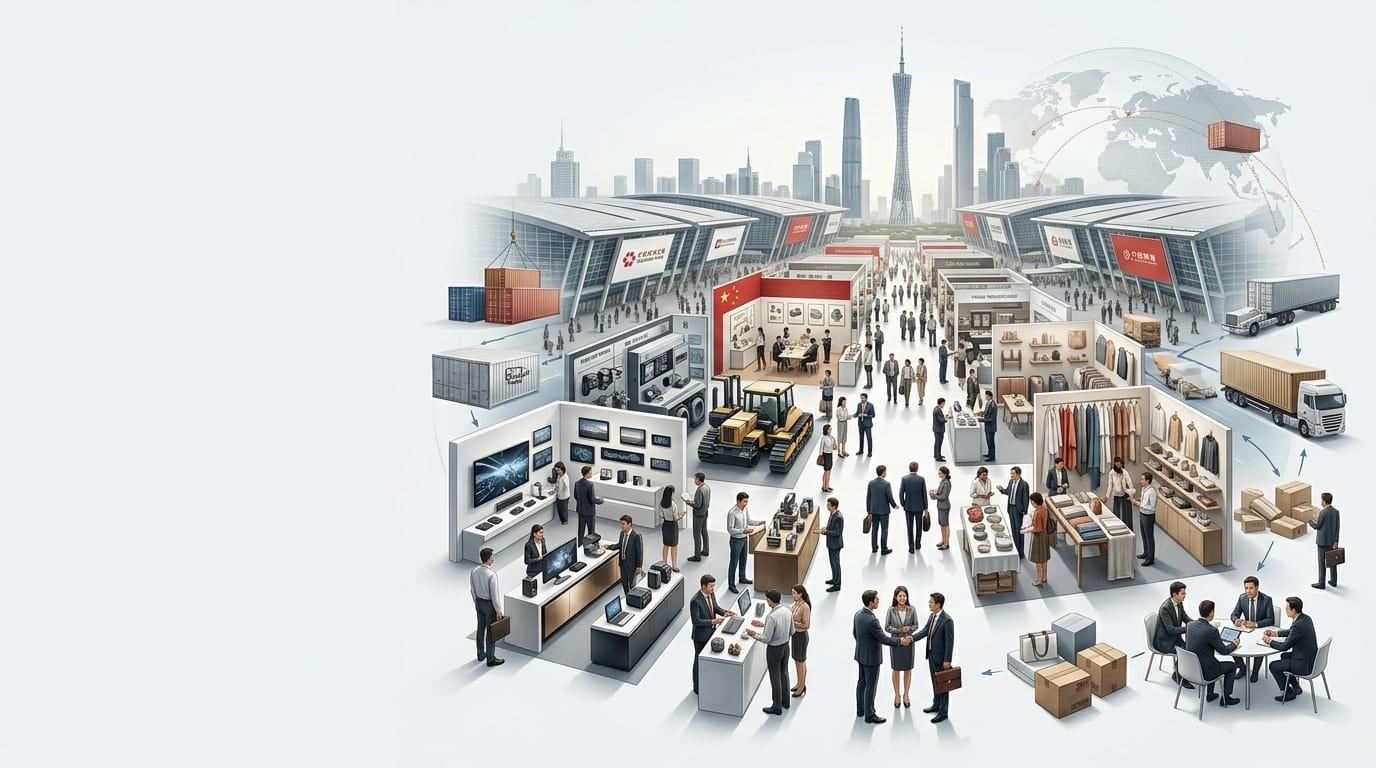
The Canton Fair—officially known as the China Import and Export Fair—is widely recognized as the world's largest trade show. Held semi-annually in Guangzhou, China, this massive bi-annual exhibition serves as the single primary hub for global trade, bridging international buyers, importers, retailers, and sourcing professionals directly with top Chinese manufacturers and suppliers.
Whether you are an established enterprise importer, a growing e-commerce retailer, or a first-time business traveler exploring China sourcing, navigating the Canton Fair requires clear preparation. This complete guide delivers a detailed overview of the fair’s rich history, multi-phase breakdown, featured product categories, logistical essentials, and strategies for success.
Quick Reference: Canton Fair at a Glance (Featured Snippets)
What is the Canton Fair?
The Canton Fair (China Import and Export Fair) is China's oldest, largest, and most comprehensive international trade exhibition. Co-hosted by the Ministry of Commerce of China and the People's Government of Guangdong Province, it features tens of thousands of verified Chinese exporters across nearly every manufacturing sector.
Where is the Canton Fair held?
The Canton Fair is held at the China Import and Export Fair Complex (Pazhou Complex) located in the Haizhu District of Guangzhou, Guangdong Province, China. It is one of the largest modern exhibition centers in the world.
When is the Canton Fair held?
The fair runs twice a year in two seasonal sessions:
Spring Session: Mid-April to early May.
Autumn Session: Mid-October to early November.
How many phases does the Canton Fair have?
Each session is divided into three distinct phases. Every phase lasts 5 days, focusing on completely different product categories and industrial sectors.
1. What Is the Canton Fair?
The Canton Fair serves as a bellwether for China’s foreign trade sector and global economic trends. First convened in the spring of 1957, the fair has taken place uninterrupted every spring and autumn for decades.
Unlike niche trade shows focused strictly on a single vertical, the Canton Fair covers virtually every manufacturing industry in China. It provides a physical platform where international businesses can inspect raw products, sample physical goods, meet direct factory owners, negotiate pricing, and finalize production contracts under one roof. For global business leaders, it is the primary gateway for sourcing products from China.
2. History of the Canton Fair: A Legacy of International Trade
Understanding the history of the Canton Fair provides crucial context for its status today:
1957 (Establishment): Founded in Guangzhou (then widely known internationally as Canton) to earn foreign currency and build international trade relationships.
1970s–1980s (Economic Reform): Following China's economic opening under Deng Xiaoping, foreign participation grew rapidly as private and state-owned enterprises expanded production capabilities.
2001 (WTO Accession): China’s entry into the World Trade Organization accelerated global attendance, turning the fair into the centerpiece of the world’s manufacturing supply chain.
2007 (Name Change): Formally renamed the China Import and Export Fair to reflect a dual mission: promoting Chinese exports while facilitating foreign product imports into the Chinese domestic market.
Modern Era (Digital & Hybrid Expansion): Today, the fair seamlessly integrates physical floor spaces with an extensive online platform, smart navigation tools, and global buyer services.
3. Why Is the Canton Fair Important?
For international buyers and sourcing companies, attending the fair offers distinct competitive advantages over digital-only communication:
Direct Access to Manufacturers: You meet factory owners, upper management, and key trade delegates directly rather than middleman agents.
Early Product Discoveries: Manufacturers premiere their newest designs, patented technologies, and upcoming product lines before they hit the open market.
On-the-Spot Quality Verification: You can inspect physical samples, evaluate materials, and test product functionality firsthand.
High Bargaining Power: Concentrating hundreds of competing factories into a single venue provides buyers with strong leverage during price negotiations.
4. Where Is the Canton Fair Held?
The event takes place at the China Import and Export Fair Complex (often referred to simply as the Pazhou Complex).
Located along the Pearl River in Guangzhou's Pazhou Island, Haizhu District, the venue spans over 1.1 million square meters of indoor exhibition area. The complex is divided into four main functional zones: Area A, Area B, Area C, and Area D. The venue features dedicated metro stops (Pazhou Station and Xingangdong Station on Line 8), on-site dining, banking services, and trade support offices.
5. When Is the Canton Fair Held? (Schedule & Seasonal Structure)
The Canton Fair operates on a predictable bi-annual schedule: the Spring Canton Fair (April–May) and the Autumn Canton Fair (October–November).
Each session spans 15 days of trade split across three 5-day exhibition phases, separated by 3-day changeover periods where halls are completely swapped out for incoming exhibitors.
Typical Canton Fair Schedule
Spring Session - Phase 1 (April 15 – April 19): Focuses on Industrial, Electronics, Vehicles, Machinery, and Building Materials.
Spring Session - Phase 2 (April 23 – April 27): Focuses on Consumer Goods, Gifts, Home Décor, and Furniture.
Spring Session - Phase 3 (May 1 – May 5): Focuses on Textiles, Apparel, Shoes, Office Goods, Medical, and Food.
Autumn Session - Phase 1 (October 15 – October 19): Focuses on Industrial, Electronics, Vehicles, Machinery, and Building Materials.
Autumn Session - Phase 2 (October 23 – October 27): Focuses on Consumer Goods, Gifts, Home Décor, and Furniture.
Autumn Session - Phase 3 (October 31 – November 4): Focuses on Textiles, Apparel, Shoes, Office Goods, Medical, and Food.
Note: Dates may shift slightly depending on regional holidays or calendar adjustments; visitors should confirm exact session schedules via official Canton Fair channels before booking travel.
6. Canton Fair Phases Explained
Because product lines change entirely between phases, visiting during the wrong week can result in missed opportunities.
Canton Fair Phase Breakdown
Phase 1: Electronics, Machinery, Vehicles, Hardware, Lighting, Energy, Chemical
Who Should Attend: Electronics importers, industrial buyers, hardware distributors, automotive firms.
Example Products: Consumer tech, home appliances, power tools, solar panels, EV parts, CNC equipment.
Ideal Buyer Profile: Tech retailers, hardware chains, engineering & construction buyers.
Phase 2: Home Goods, Ceramics, Gifts, Toys, Furniture, Kitchenware, Decor
Who Should Attend: Retail chain buyers, home goods brands, interior decorators, gift shop owners.
Example Products: Tableware, garden tools, patio furniture, holiday decor, general household items.
Ideal Buyer Profile: Department stores, e-commerce home brand owners, hotel supply buyers.
Phase 3: Apparel, Textiles, Footwear, Luggage, Office Goods, Medical, Food
Who Should Attend: Fashion brands, garment importers, office supply vendors, medical suppliers.
Example Products: Men's/Women's wear, athletic shoes, leather bags, stationery, PPE, packaged foods.
Ideal Buyer Profile: Apparel brands, boutique owners, medical device distributors, stationery chains.
7. What Products Can You Find at the Canton Fair?
The fair hosts over 50 specialized product sections. Key sectors include:
Electronics & Appliances (Phase 1): Smart home devices, personal electronics, commercial appliances, audio-visual equipment.
Industrial & Heavy Equipment (Phase 1): Construction machinery, agricultural gear, automated processing lines, hardware tools.
New Energy & Vehicles (Phase 1): Electric vehicles, lithium-ion battery solutions, solar power hardware.
Household & Ceramics (Phase 2): Kitchenware, daily-use ceramics, storage products, cleaning supplies.
Furniture & Home Decor (Phase 2): Indoor/outdoor furniture, office seating, decorative glass, artificial plants.
Textiles & Garments (Phase 3): Casual wear, sportswear, home textiles, raw fabrics, fashion accessories.
Medical Devices & Personal Care (Phase 3): Diagnostic tools, surgical consumables, health monitors, beauty products.
8. Who Attends the Canton Fair?
The fair attracts hundreds of thousands of registered visitors per session from over 200 countries and territories.
Buyers & Importers: E-commerce sellers (Amazon, Shopify), wholesale distributors, enterprise retail chains, and procurement firms.
Exhibitors & Suppliers: Direct original factories (OEM/ODM), state-owned export corporations, specialized trading companies, and international brands in the import zone.
9. How the Canton Fair Works: The Visitor Experience
Navigating the Canton Fair requires clear steps before and during the event:
Step 1: Online Pre-Registration: International buyers should apply for registration online through the official Canton Fair portal in advance. Pre-registration grants a free official invitation letter required for business visa applications.
Step 2: Securing Your Buyer Badge: Entry requires an official paperless IC Card (Buyer Badge). Completing online pre-registration waives the onsite processing fee. Badges can be collected at Guangzhou airport, designated partner hotels, or complex badge centers.
Step 3: Navigating Exhibition Halls: The venue spans multiple levels across four main halls. Utilizing official floor plans and digital navigation apps helps locate targeted booths quickly.
Step 4: Meeting Suppliers: Walk the aisles, speak with export sales teams, evaluate product samples, exchange business cards, and take detailed photos of booth numbers and product specification sheets.
10. Canton Fair vs. Other China Sourcing Options
While the Canton Fair is a powerful sourcing venue, smart procurement professionals compare it against other options:
Canton Fair
Key Advantages: Massive scale, face-to-face trust, inspect real samples, discover new designs.
Disadvantages: High travel costs, short duration, crowd fatigue.
Best Suited For: Comprehensive supplier discovery, new product research.
B2B Online Platforms (Alibaba, Global Sources)
Key Advantages: 24/7 access, low initial cost, easy search filters.
Disadvantages: Sample quality mismatch, middleman traders posing as factories.
Best Suited For: Small initial orders, quick product replacement.
Direct Factory Visits
Key Advantages: Full audit of facility, deep negotiations, private ODM projects.
Disadvantages: Time-consuming travel within China, high logistical effort.
Best Suited For: Large-volume buyers placing high-value custom production runs.
Wholesale Markets (Yiwu Market)
Key Advantages: Immediate stock availability, extremely low minimum order quantities (MOQs).
Disadvantages: Lower technical complexity, inconsistent quality control.
Best Suited For: Small items, accessories, fast consumer goods, low-end novelties.
Sourcing Agents
Key Advantages: Local boots-on-the-ground support, quality inspection, language assistance.
Disadvantages: Commission fees (3-10%), potential commission conflict of interest.
Best Suited For: Buyers unable to travel or managing multi-factory consolidation.
11. Core Benefits of Attending
Streamlined Supplier Discovery: Compare dozens of verified manufacturers in a single afternoon.
Direct Price & MOQ Negotiation: Discuss Minimum Order Quantities, payment terms, and volume discounts face-to-face.
Custom Manufacturing (OEM/ODM): Bring your own CAD designs or specification sheets to discuss custom tooling directly with engineers.
Market & Trend Intelligence: See global design trends, eco-friendly materials, and competitive market developments firsthand.
12. Potential Challenges & How to Mitigate Them
Exhibition Fatigue: Walking miles across sprawling halls causes physical exhaustion. Solution: Wear broken-in walking shoes and focus on pre-selected halls.
Language Barriers: While most sales staff speak English, deep technical discussions can hit friction. Solution: Prepare translation apps (e.g., WeChat translation) or hire a local interpreter.
Supplier Follow-up Lag: Factory representatives receive thousands of business cards during the fair. Solution: Send follow-up emails while still in Guangzhou, referencing specific booth photos taken together.
Internet Restrictions: Standard foreign internet access can be restricted on local networks. Solution: Acquire an international roaming package, an eSIM with built-in data routing, or set up verified tools prior to arrival.
13. Practical Preparation Checklist for International Visitors
[ ] Passport & Visa: Ensure your passport has at least 6 months of validity. Apply for a Chinese M (Business) or L (Tourist) visa using your official Canton Fair invitation letter.
[ ] Pre-Registration: Register early on the official Canton Fair portal to avoid onsite badge processing fees.
[ ] Hotel Booking: Secure accommodation along Metro Line 8 or near official fair shuttle bus routes months in advance, as room rates surge during fair dates.
[ ] Digital Tools & Payments: Download WeChat and Alipay for digital payments, messaging, and communication with suppliers.
[ ] Business Cards & Spec Sheets: Bring hundreds of physical business cards or digital QR cards, along with clear specification sheets for your custom sourcing needs.
14. Combining Business with Travel: Guangzhou as a Destination
Guangzhou—the historic capital of Guangdong province—offers rich cultural experiences alongside trade:
Cuisine: Renowned as the birthplace of authentic Cantonese Dim Sum.
Landmarks: Visit the iconic Canton Tower, historic Shamian Island, and modern Zhujiang New Town skyline.
Manufacturing Hub Proximity: Guangzhou sits at the heart of the Pearl River Delta industrial cluster, making short day trips to Foshan (furniture), Zhongshan (lighting), or Shenzhen (electronics) simple and fast via high-speed train.
15. Is the Canton Fair Worth Visiting?
Yes, the Canton Fair is worth visiting if your business goal is to build direct manufacturing relationships, source medium-to-large production volumes, or discover emerging consumer product trends.
However, if you are looking to purchase tiny stock quantities (e.g., 5-10 units), specialized single-piece samples, or low-grade commodity items, online B2B platforms or specialized markets like Yiwu may yield better efficiency.
16. The Future of the Canton Fair: Hybrid Trade & AI Integration
The Canton Fair continues to modernize its traditional structure:
Hybrid Exhibition Models: Year-round digital storefronts complement physical 5-day exhibitions.
AI Sourcing Tools: Intelligent matching engines assist buyers in mapping out product categories, translating specifications, and matching buyer RFQs with qualified factories before landing in Guangzhou.
Focus on Sustainability: Exhibitors increasingly highlight recycled materials, green energy efficiency, and low-carbon production certifications to meet global standards.
Frequently Asked Questions (FAQs)
Is the Canton Fair open to foreigners?
Yes, the Canton Fair is specifically designed for international buyers and welcomed foreign visitors from over 200 countries. Foreign buyers must register with a valid foreign passport to collect their Buyer Badge.
Is there an entry fee for the Canton Fair?
Pre-registering online makes entry to the Canton Fair free for international buyers. However, if you register on-site without pre-registration, a processing fee of 100 RMB (approx. $15 USD) applies.
How long should I spend at the Canton Fair?
Most international buyers spend 3 to 4 days per phase. This gives you enough time to walk targeted exhibition halls, compare competing suppliers, and schedule factory visits immediately following the show.
What is the difference between the Canton Fair phases?
Each phase features completely different product lines: Phase 1 covers electronics and industrial equipment; Phase 2 covers home goods, decor, and furniture; and Phase 3 covers apparel, shoes, medical supplies, and office products.
Can I buy individual retail items or samples at the fair?
No, the Canton Fair is a B2B trade show focused on wholesale production and export orders. While some suppliers sell floor samples on the final day of a phase, most booths focus exclusively on taking future production orders.
Do suppliers at the Canton Fair speak English?
Yes, almost all booths have sales representatives who speak conversational business English. For complex technical negotiations or custom engineering specs, hiring a local translator is recommended.
How do I get an invitation letter for my visa?
After pre-registering on the official Canton Fair buyer portal, you can generate an official E-Invitation Letter free of charge. Submit this letter alongside your visa application to the Chinese embassy or consulate.
What is the best way to get to the Canton Fair Complex?
The fastest, most reliable way to reach the Pazhou Complex is via the Guangzhou Metro Line 8 (get off at Xingangdong or Pazhou Station). Taxi, ride-hailing services, and hotel shuttle buses are also widely available.
How do I verify if an exhibitor is a real factory or a trading company?
Ask direct questions regarding plant locations, worker counts, production line setups, and quality management certifications (e.g., ISO 9001, BSCI). You can also schedule an on-site factory audit in nearby industrial zones right after the fair.
Can I attend more than one phase during a single trip?
Yes, your Buyer Badge is valid across all phases and multiple sessions. Keep in mind there is a 3-day gap between phases where the exhibition halls are closed for booth changeover.
Should I hire a sourcing agent when visiting the fair?
First-time buyers unfamiliar with Chinese manufacturing, shipping logistics, or quality inspections often benefit from hiring a reputable sourcing agent to assist with follow-ups and order management.
How far in advance should I book my travel?
Book your hotel and flights 2 to 4 months in advance. Guangzhou hotels fill up quickly during fair season, and room rates often double or triple close to opening dates.
Ready to get an eSIM?
Browse plans for 190+ countries. Purchase in minutes, install in seconds.