
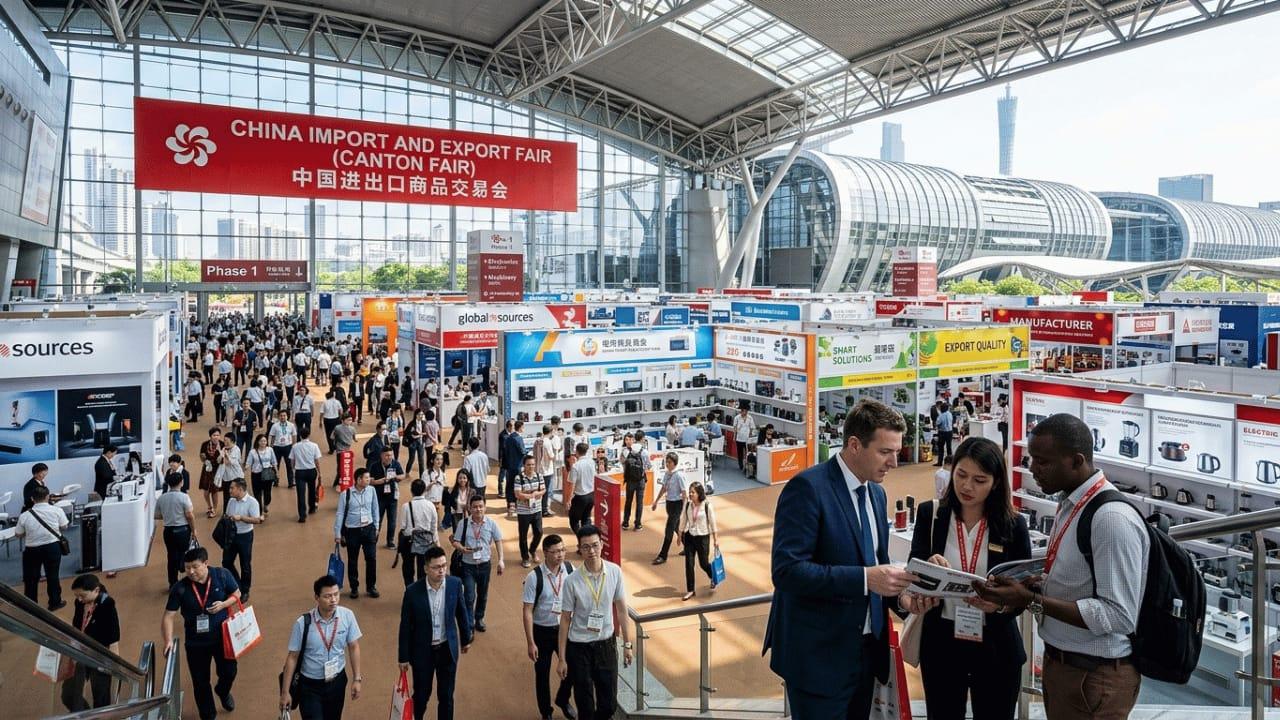
The Canton Fair is China’s largest, oldest, and most comprehensive international trade exhibition, held biannually in Guangzhou every spring and autumn. Formally known as the China Import and Export Fair, this massive event brings together over 28,000 top-tier Chinese manufacturers, trading companies, and factory representatives across three distinct phases.
For international buyers, importers, wholesalers, e-commerce brands, and sourcing agents, attending the Canton Fair provides direct, face-to-face access to global supply chains, cutting-edge product innovations, and competitive factory-direct pricing. Navigating a trade show that spans over 1.5 million square meters requires careful preparation. This complete visitor guide covers everything you need to know to plan your trip, register for your buyer badge, navigate the venue, evaluate suppliers, and turn booth conversations into profitable trade deals.
What is the Canton Fair?
The Canton Fair is a massive multi-sector trade show co-hosted by the Ministry of Commerce of China and the People’s Government of Guangdong Province. Established in 1957, it serves as the primary gateway for international businesses sourcing goods directly from Chinese factories.
Unlike regional or industry-specific exhibitions, the Canton Fair showcases virtually every consumer and industrial product category manufactured in China. The event takes place twice a year—the Spring Session in April/May and the Autumn Session in October/November. Because of its physical size and the volume of exhibitors, each session is divided into three consecutive 5-day phases, separated by short intervals to allow product categories and booth setups to rotate.
+-----------------------------------------------------------------------+
|                         CANTON FAIR STRUCTURE                         |
+-----------------------------------------------------------------------+
|  SPRING SESSION (April–May)     |    AUTUMN SESSION (October–Nov)     |
+---------------------------------+-------------------------------------+
|  Phase 1: Industrial & Electronics|  Phase 1: Industrial & Electronics |
|  Phase 2: Home, Decor & Gifts   |  Phase 2: Home, Decor & Gifts       |
|  Phase 3: Textiles, Health & Food|  Phase 3: Textiles, Health & Food   |
+-----------------------------------------------------------------------+
Why the Canton Fair is Essential for International Buyers
Attending the Canton Fair gives global businesses a competitive edge that digital sourcing platforms like Alibaba, Global Sources, or Made-in-China cannot replicate.
Direct Factory Access: You can speak directly with factory owners, general managers, and technical engineers rather than third-party middle agents or online sales reps.
Physical Quality Verification: You can inspect product materials, test build quality, evaluate sample finishes, and compare dozens of competing manufacturers under one roof.
Unreleased Product Discoveries: Manufacturers showcase their latest prototypes, patented designs, and upcoming product lines months before they appear online or hit international markets.
Faster Contract & Price Negotiations: Face-to-face discussions allow you to negotiate Minimum Order Quantities (MOQs), unit costs, payment terms, and custom OEM/ODM packaging in real time.
Supplier Vetting: Physical booth size, product specialization, and staff expertise give you immediate insight into a supplier’s operational capacity and business scale.
Where is the Canton Fair Held?
The Canton Fair takes place at the China Import and Export Fair Complex (commonly called the Pazhou Complex), located in Haizhu District, Guangzhou, Guangdong Province, China.
Official Address (English): No. 380, Yuejiang Zhong Road, Haizhu District, Guangzhou 510335, China
Official Address (Chinese): 中国广州市海珠区阅江中路380号 (中国进出口商品交易会展馆)
The Pazhou Complex is one of the largest modern exhibition centers in the world, split into four interconnected exhibition zones:
Area A: Home to large industrial machinery, electronics, and heavy equipment.
Area B: Houses household goods, consumer electronics, hardware, and building materials.
Area C: Primary venue for textiles, apparel, footwear, and health products.
Area D: Houses advanced manufacturing, new energy vehicles, and international pavilions.
Canton Fair Dates, Phases, and Product Categories
To maximize your time and budget, you must attend the specific phase that features your target industry. Exhibitors do not repeat across phases; once a phase ends, those suppliers pack up and vacate the venue.
+-------------------------------------------------------------------------------------------+
|                          CANTON FAIR 2026 OFFICIAL SCHEDULE                               |
+---------+--------------------+--------------------+---------------------------------------+
| Phase   | Spring 2026 Dates  | Autumn 2026 Dates  | Primary Product Categories            |
+---------+--------------------+--------------------+---------------------------------------+
| Phase 1 | April 15 – 19      | October 15 – 19    | Electronics, Machinery, Vehicles,     |
|         |                    |                    | Energy, Hardware, Building Materials  |
+---------+--------------------+--------------------+---------------------------------------+
| Phase 2 | April 23 – 27      | October 23 – 27    | Home Decor, Furniture, Kitchenware,   |
|         |                    |                    | Gifts, Gardening, Toys, Ceramics      |
+---------+--------------------+--------------------+---------------------------------------+
| Phase 3 | May 1 – 5          | November 31 – Nov 4| Apparel, Shoes, Bags, Textiles, Food, |
|         |                    |                    | Office Supplies, Medical & Health     |
+---------+--------------------+--------------------+---------------------------------------+
(Note: Always confirm exact dates on the official website before booking travel.)
Phase 1 Breakdown: Industrial, High-Tech & Hardware
Phase 1 focuses heavily on heavy industry, technological innovation, electronics, and hardware.
Consumer Electronics & Appliances: Smart home devices, audio-video equipment, kitchen appliances, personal electronics.
Lighting & Electrical: LED fixtures, industrial lighting, electrical components, power generation.
Vehicles & Mobility: Electric vehicles (EVs), scooters, auto parts, industrial transport, bicycles.
Machinery & Equipment: CNC machines, packaging equipment, construction machinery, agricultural tools.
Hardware & Tools: Hand tools, power tools, fasteners, locks, construction hardware.
New Energy: Solar PV panels, lithium storage batteries, wind energy products, thermal systems.
Phase 2 Breakdown: Home, Decor & Consumer Goods
Phase 2 caters to consumer retail, home improvement, interior design, and gift markets.
Houseware & Kitchenware: Daily ceramics, cookware, tableware, cleaning supplies, storage solutions.
Home Decor & Furnishings: Indoor/outdoor furniture, glass art, wall clocks, festival decorations, stone/iron crafts.
Gardening & Outdoor: Lawn care tools, patio sets, outdoor leisure gear, landscaping materials.
Gifts & Premiums: Promotional items, optical instruments, crafts, party supplies.
Phase 3 Breakdown: Fashion, Textiles, Health & Office
Phase 3 covers soft goods, personal care, fashion, medical equipment, and office supplies.
Apparel & Fashion: Men's, women's, and children's clothing, sportswear, undergarments, leather, down products.
Footwear & Luggage: Travel bags, backpacks, business cases, athletic shoes, formal footwear.
Textiles & Fabrics: Home textiles, bed linens, upholstery fabrics, yarn, raw textile materials.
Medical Devices & Health: Personal care appliances, medical consumables, diagnostic tools, therapeutic equipment.
Office & School Supplies: Stationery, office automation products, paper goods.
Food & Sports: Processed food, regional specialties, outdoor sports equipment, pet products.
Who Should Attend the Canton Fair?
The Canton Fair is designed for business-to-business (B2B) sourcing and trade. It is ideal for:
E-commerce Brands & Amazon FBA Sellers: Discovering unique private-label products, upgrading current product lines, and negotiating lower unit costs.
Importers & Wholesalers: Locating scalable manufacturing partners, securing distribution agreements, and auditing factory credentials.
Retail Chain Buyers: Securing volume discounts, customizing seasonal inventories, and reviewing new product releases.
Sourcing Agents & Brokers: Connecting international clients with verified Chinese factories and expanding local supplier networks.
Product Developers & Inventors: Sourcing specialized components, custom molders, and OEM/ODM engineering partners.
Registration, Badges, and Entry Requirements
Entry to the Canton Fair requires an official Buyer’s Badge (Buyer IC Card). This physical photo ID badge grants entry to all three phases across multiple sessions and remains valid for years.
+-------------------------------------------------------------------------------------------+
|                          BUYER BADGE REGISTRATION OVERVIEW                                |
+----------------------+--------------------+--------------------+--------------------------+
| Attendee Type        | Pre-Registration   | On-Site Fee        | Key Documents Needed     |
+----------------------+--------------------+--------------------+--------------------------+
| First-Time Buyer     | FREE Online        | 100 RMB (~$15 USD) | Passport, Photo, Card,   |
|                      |                    |                    | E-Invitation Letter      |
+----------------------+--------------------+--------------------+--------------------------+
| Returning Buyer      | FREE (Use Badge)   | 200 RMB (Replace)  | Previous IC Card,        |
|                      |                    | if lost            | Passport, Business Card  |
+----------------------+--------------------+--------------------+--------------------------+
How to Pre-Register Online (Recommended)
Visit the official website:
cantonfair.org.cn/en-US.Create an account under the Overseas Buyer section.
Fill out your personal details, upload a passport copy, attach a business card, and submit a clear passport-style headshot (5x4 cm).
Once approved, download your official E-Invitation Letter.
Pre-registering waives the 100 RMB on-site badge processing fee and cuts down queue waiting times.
Obtaining a Chinese Business Visa (M Visa)
Most international visitors need a visa to enter mainland China.
Apply for a Business Visa (M Visa) at your local Chinese embassy, consulate, or Chinese Visa Application Service Center (CVASC).
Use your official Canton Fair E-Invitation Letter as proof of business purpose when applying.
Ensure your passport has at least 6 months of validity remaining and at least two blank visa pages.
Note: Citizens from eligible visa-waiver countries or travelers utilizing China's 144-hour transit visa exemption should verify current immigration policies prior to booking non-refundable tickets.
Planning Your Trip to Guangzhou
Flight Connections
Guangzhou’s primary airport is Guangzhou Baiyun International Airport (CAN). It connects directly to major global hubs across Europe, North America, the Middle East, Australia, and Southeast Asia. Alternatively, you can fly into Hong Kong International Airport (HKG) and reach Guangzhou via high-speed train (approx. 1 hour from West Kowloon Station to Guangzhou East or Guangzhou South) or ferry.
+-------------------------------------------------------------------------------------------+
|                      GUANGZHOU AIRPORT TO PAZHOU COMPLEX OPTIONS                          |
+------------------+------------------+------------------+----------------------------------+
| Mode             | Approx. Duration | Approx. Cost     | Best For                         |
+------------------+------------------+------------------+----------------------------------+
| Metro (Line 3->8)| 60 - 75 minutes  | 8 - 12 RMB       | Budget travelers, single bags    |
+------------------+------------------+------------------+----------------------------------+
| Taxi / Ride-Hail | 45 - 60 minutes  | 120 - 180 RMB    | Travelers with heavy luggage     |
+------------------+------------------+------------------+----------------------------------+
| Hotel Shuttle    | 45 - 60 minutes  | Free (for guests)| Direct resort/hotel pickup       |
+------------------+------------------+------------------+----------------------------------+
Navigating Local Transportation
Guangzhou Metro: The fastest, most reliable way to travel around the city. The Canton Fair Complex is served directly by Pazhou Station and Xingangdong Station on Metro Line 8.
Taxis & DiDi (Ride-Hailing): Download the Alipay or WeChat app to use DiDi (China’s equivalent of Uber). Avoid unmetered, unofficial drivers offering flat-rate rides outside airport terminals.
Hotel Shuttles: Most 4-star and 5-star hotels in Guangzhou offer complimentary shuttle buses to and from the Pazhou Complex during fair operating hours.
Accommodations: Where to Stay
Hotel room rates surge during Canton Fair dates, and prime properties sell out months in advance.
Pazhou Complex Area (Best for Proximity): Hotels like The Westin Pazhou (connected directly to the venue), InterContinental Guangzhou Exhibition Center, and Langham Place offer direct access to the halls. These command premium prices.
Tianhe District / Zhujiang New Town (Best for Dining & Nightlife): Located 20–30 minutes away by metro or taxi. Top properties include The Ritz-Carlton, Grand Hyatt, Conrad, and Marriott. This area puts you right next to Western restaurants, shopping malls, and corporate amenities.
Haizhu / Yuexiu District (Best for Budget): Boutique business hotels along Metro Line 8 provide convenient venue access via a short subway ride at more economical nightly rates.
Practical Digital Tools & Connectivity Requirements
Navigating China without the right digital preparation can derail your business trip. Because China’s domestic networks restrict access to platforms like Google, WhatsApp, Instagram, and major Western news outlets, setting up your mobile connectivity beforehand is critical.
Internet Connectivity: Local SIM vs. Roaming vs. eSIM
China eSIM: The simplest option for international visitors. Installing a regional or China-specific eSIM prior to departure lets you maintain high-speed 5G mobile data the moment you land. Most international eSIM packages automatically route traffic through roaming servers, keeping your primary communication apps active without requiring additional network adjustments.
International Roaming: convenient but can get expensive quickly depending on your primary home carrier.
Local Physical SIM Card: Available at Guangzhou Airport arrivals. Requires passport registration and identity verification at the counter.
Essential Digital Apps for China
WeChat: Essential for business networking and messaging. Every Chinese supplier uses WeChat for quote follow-ups, sending digital catalogs, and instant translation. It also includes payment functions.
Alipay: The primary payment method for international visitors. You can link your international Visa or Mastercard directly to Alipay to pay for meals, subways, taxis, and convenience stores.
DiDi (Applet inside Alipay/WeChat): Reliable ride-hailing service with automatic English translation and built-in payment integration.
Pleco: High-accuracy English-Chinese dictionary app with offline camera scanning for immediate text translation.
Amap (Gaode Maps) / Apple Maps: Google Maps is unreliable in mainland China. Apple Maps works well, while Amap provides precise local transit routes.
How to Prepare Before Arriving at the Fair
Set Clear Sourcing Goals: Define target product specs, land-cost budgets, and target MOQs before walking into the venue.
Bring Physical Business Cards: Digital contacts are common, but traditional factory reps still prefer physical business cards. Carry at least 200–300 cards per phase.
Pack Comfortable Footwear: Expect to walk 15,000 to 25,000 steps daily across concrete exhibition floors.
Carry a Wheeled Carry-On Suitcase: Paper catalogs, product samples, and specs accumulate quickly and get heavy. A rolling bag keeps your hands free to handle products and take notes.
Prepare a Supplier Questionnaire: Have a set list of questions ready to ask every supplier to make direct comparison easier.
How to Find and Evaluate Suppliers on the Fair Floor
With thousands of booths across massive halls, working through the floor requires a clear strategy.
+-------------------------------------------------------------------------------------------+
|                        FACTORY VS. TRADING COMPANY COMPARISON                             |
+-----------------------+-----------------------------------+-------------------------------+
| Attribute             | Direct Manufacturer (Factory)     | Trading Company (Middleman)   |
+-----------------------+-----------------------------------+-------------------------------+
| Pricing               | Lower baseline unit cost          | 10% - 30% margin markup       |
+-----------------------+-----------------------------------+-------------------------------+
| Minimum Order (MOQ)   | Higher MOQs                       | Lower, flexible MOQs          |
+-----------------------+-----------------------------------+-------------------------------+
| Product Variety       | Narrow focus on core line         | Broad catalog from multiple   |
|                       |                                   | partners                      |
+-----------------------+-----------------------------------+-------------------------------+
| Customization (OEM)   | Direct engineering & molds        | Indirect communication        |
+-----------------------+-----------------------------------+-------------------------------+
| Communication         | Technical, direct staff           | English-fluent sales team     |
+-----------------------+-----------------------------------+-------------------------------+
Essential Questions to Ask Exhibitors
"Are you a direct manufacturer or a trading company?" (Ask where their factory is located and if you can schedule an audit visit after the fair).
"What is your standard Minimum Order Quantity (MOQ) for this specific item?"
"What is your FOB (Free on Board) unit price for [X] units?" (Specify port name, e.g., FOB Ningbo, FOB Shenzhen, FOB Guangzhou).
"What certifications does this product hold for my market?" (e.g., CE, FCC, RoHS, FDA, UL, ETL).
"What is the standard production lead time after sample approval and deposit payment?"
"What are your standard OEM/ODM customization options and custom mold costs?"
Pro Tips for Organized Note-Taking
Take a photo of the supplier's booth sign showing their Booth Number and company name.
Snap photos of the specific product and its item code.
Collect the rep's business card or scan their WeChat contact QR code.
Use a notebook or voice recorder to log quoted prices, MOQs, and key conversation details right at the booth.
Supplier Safety, Due Diligence, and Negotiations
Never place large production orders or transfer deposits on the fair floor based solely on a conversation.
Verify Factory Legitimacy: Confirm the business license name matches their banking details.
Request Official Samples: Order production-grade samples to test build quality, packaging, and functionality before signing contracts.
Conduct a Factory Audit: If possible, take a 1–2 day trip to visit the manufacturer's facility in nearby Guangdong hubs (Foshan, Dongguan, Shenzhen, Zhongshan) immediately after the fair.
Negotiate Terms Wisely: Start by discussing quality standards, packaging, and warranty terms before negotiating unit costs.
Secure Payment Terms: Standard international trade payment terms are 30% T/T (Telegraphic Transfer) deposit upon order signing, with the remaining 70% balance due after pre-shipment inspection approval. Avoid paying 100% upfront to unknown vendors.
Common First-Time Visitor Mistakes to Avoid
Attending the Wrong Phase: Double-check product categories before booking non-refundable flights. Electronics suppliers won't be around during Phase 3.
Trying to See Everything: The venue is too vast to walk every aisle completely. Stick to your targeted product zones.
Failing to Setup VPN/eSIM Before Arrival: Trying to set up roaming access or download connectivity apps after landing can lead to connectivity issues.
Relying Solely on Cash: Most vendors prefer digital contact sharing and business cards over printed price sheets.
Forgetting to Follow Up Quickly: Factory reps collect hundreds of business cards daily. If you don't message them within 3–5 days after the fair, your inquiry can easily get buried.
Post-Fair Follow-Up Strategy
Your real sourcing work begins once the exhibition floor closes.
+-------------------------------------------------------------------------------------------+
|                          POST-FAIR SUPPLIER FOLLOW-UP TIMELINE                            |
+------------------+------------------------------------------------------------------------+
| Timeline         | Action Items                                                           |
+------------------+------------------------------------------------------------------------+
| Days 1 – 3       | Sort collected cards, catalog photos, and booth notes into a central   |
|                  | spreadsheet.                                                           |
+------------------+------------------------------------------------------------------------+
| Days 4 – 7       | Send personalized follow-up emails and WeChat messages referencing     |
|                  | your booth conversation. Reiterate product specs and request formal    |
|                  | PI (Proforma Invoice) quotes.                                          |
+------------------+------------------------------------------------------------------------+
| Weeks 2 – 3      | Pay for official product sample production and evaluate sample quality |
|                  | upon delivery.                                                         |
+------------------+------------------------------------------------------------------------+
| Week 4+          | Finalize contract terms, conduct factory audits, and place initial     |
|                  | trial production orders.                                               |
+------------------+------------------------------------------------------------------------+
Canton Fair First-Time Visitor Checklist
+-------------------------------------------------------------------------------------------+
|                          CANTON FAIR FIRST-TIME VISITOR CHECKLIST                         |
+-------------------------------------------------------------------------------------------+
| PRE-TRIP PREPARATION                                                                     |
| [ ] Verify the correct Canton Fair Phase for your specific product industry               |
| [ ] Pre-register online at cantonfair.org.cn to secure a FREE Buyer's Badge pass          |
| [ ] Receive official E-Invitation Letter and secure Chinese Business Visa (M Visa)        |
| [ ] Book flights to Guangzhou (CAN) or Hong Kong (HKG) and reserve hotels early          |
| [ ] Buy and configure a China eSIM to ensure uninterrupted mobile data roaming            |
| [ ] Download WeChat, Alipay, Pleco, and DiDi apps to your smartphone                      |
|                                                                                           |
| WHAT TO PACK & BRING TO THE VENUE                                                         |
| [ ] Physical Passport (required for initial badge pickup and entry checks)                |
| [ ] Pre-registration confirmation bar code or physical Buyer IC Card                      |
| [ ] 200+ physical business cards                                                          |
| [ ] Comfortable walking shoes                                                             |
| [ ] Rolling carry-on suitcase for catalogs, spec sheets, and product samples              |
| [ ] High-capacity portable power bank and charging cables                                 |
| [ ] Small notebook, pen, and photo-taking smartphone                                      |
|                                                                                           |
| ON-SITE STRATEGY                                                                          |
| [ ] Focus strictly on your designated product zone and hall maps                          |
| [ ] Photograph booth signs, business cards, and product samples together                  |
| [ ] Ask key questions regarding MOQs, FOB pricing, lead times, and certifications         |
| [ ] Connect on WeChat with primary sales reps before leaving their booth                  |
|                                                                                           |
| POST-FAIR ACTION PLAN                                                                     |
| [ ] Send follow-up emails and WeChat inquiries within 3–5 days after the fair             |
| [ ] Request and inspect official production-grade product samples                         |
| [ ] Schedule factory visits/audits in nearby Guangdong manufacturing cities               |
+-------------------------------------------------------------------------------------------+
Frequently Asked Questions (FAQ)
What is the primary difference between Phase 1, Phase 2, and Phase 3?
Phase 1 focuses on industrial products, electronics, vehicles, machinery, hardware, and building materials. Phase 2 focuses on consumer items, home decor, furniture, ceramics, gifts, and toys. Phase 3 focuses on soft goods, textiles, apparel, shoes, office supplies, medical devices, and food.
Is entry to the Canton Fair free?
Pre-registering online waives the entry fee. First-time attendees who register on-site without pre-registering pay a processing fee of 100 RMB (~$15 USD) for their physical Buyer's IC Card.
How long is the Canton Fair Buyer Badge valid?
The physical Buyer IC Card is valid across multiple sessions for multiple years. Do not throw it away after your trip; replacing a lost badge in future sessions incurs a 200 RMB fee.
Can I buy individual products or samples on the show floor?
Generally, exhibitors display items for wholesale B2B manufacturing orders rather than retail sale. However, on the final afternoon of each phase, many exhibitors sell off display samples at discounted rates to avoid shipping them back to factories.
Do exhibitors at the Canton Fair speak English?
Yes, nearly all exhibition booths have English-speaking sales representatives, foreign trade managers, or translators available to discuss product details and pricing.
What is the closest major airport to the Canton Fair?
Guangzhou Baiyun International Airport (CAN) is the closest, located approximately 45 kilometers (28 miles) north of the Pazhou Complex.
How do I get from Hong Kong to the Canton Fair?
Take the MTR High-Speed Rail from Hong Kong West Kowloon Station directly to Guangzhou East or Guangzhou South Station (approx. 1 hour), then take the Guangzhou Metro Line 8 to Pazhou Station.
Do I need a VPN to access my international apps at the Canton Fair?
China restricts access to many Western online services. Using an international data roaming plan or a pre-configured China eSIM typically routes your data through servers outside mainland China, maintaining access to your usual communication tools.
What payment methods are accepted inside the venue?
Most restaurants, coffee shops, and service counters accept Alipay, WeChat Pay, and physical cash (RMB). Major international credit cards (Visa/Mastercard) are accepted at premier hotels and larger venues, but linking your card to Alipay or WeChat Pay before arriving is highly recommended.
How many days should a first-time visitor attend?
First-time attendees should spend at least 3 full days per relevant phase to walk their industry's halls, interview potential suppliers, and compile vendor comparisons.
Can I visit Chinese factories right after the fair?
Yes. Guangzhou sits at the heart of Guangdong Province, China's primary manufacturing hub. You can easily take high-speed trains or cars to visit factories in nearby cities like Foshan, Dongguan, Shenzhen, and Zhongshan.
What is the best time of year to visit Guangzhou for the Canton Fair?
The Spring Session (April/May) features moderate weather but occasional rain, while the Autumn Session (October/November) offers dry, comfortable, autumn weather.
هل أنت مستعد للحصول على eSIM؟
تصفّح الباقات لأكثر من 200 دولة. اشترِ في دقائق، وثبّت في ثوانٍ.